Ennakko
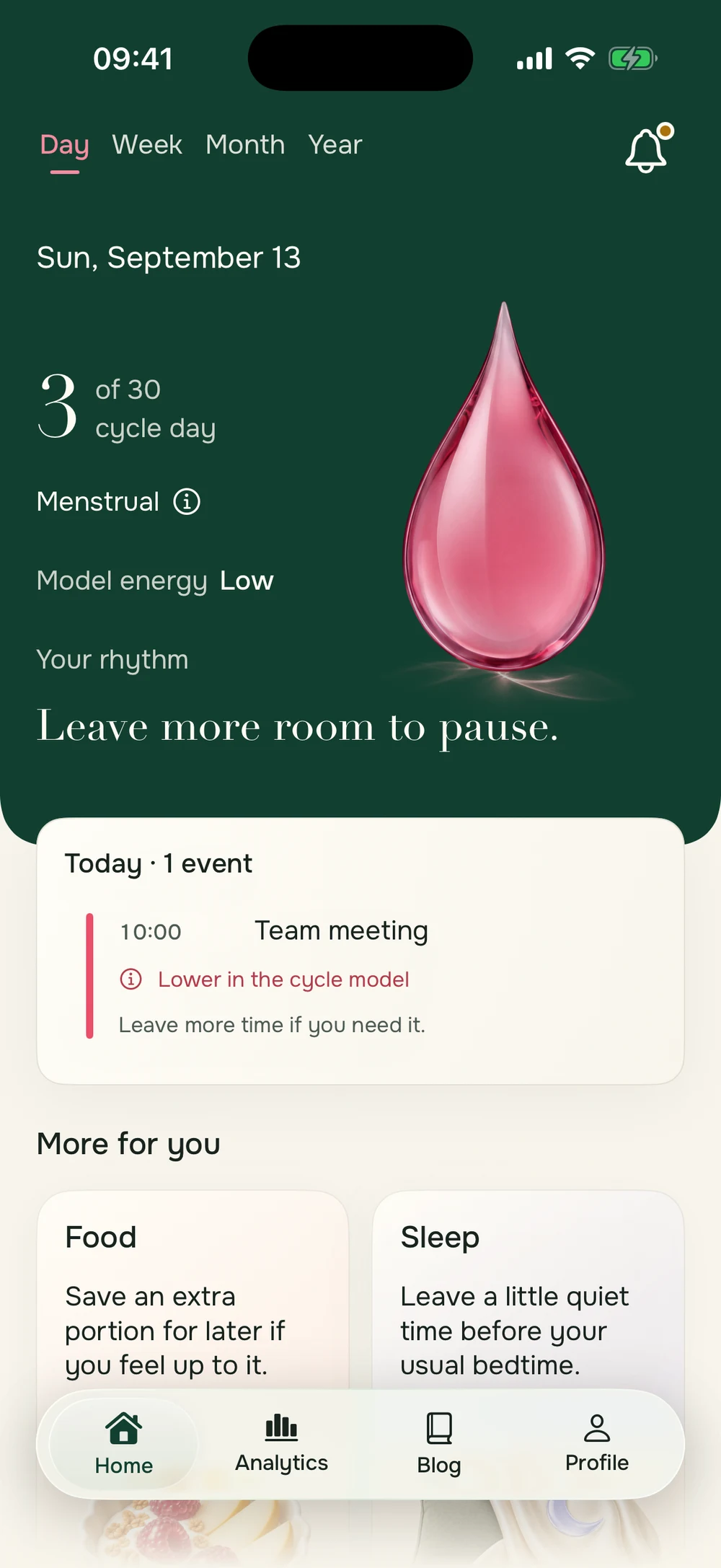
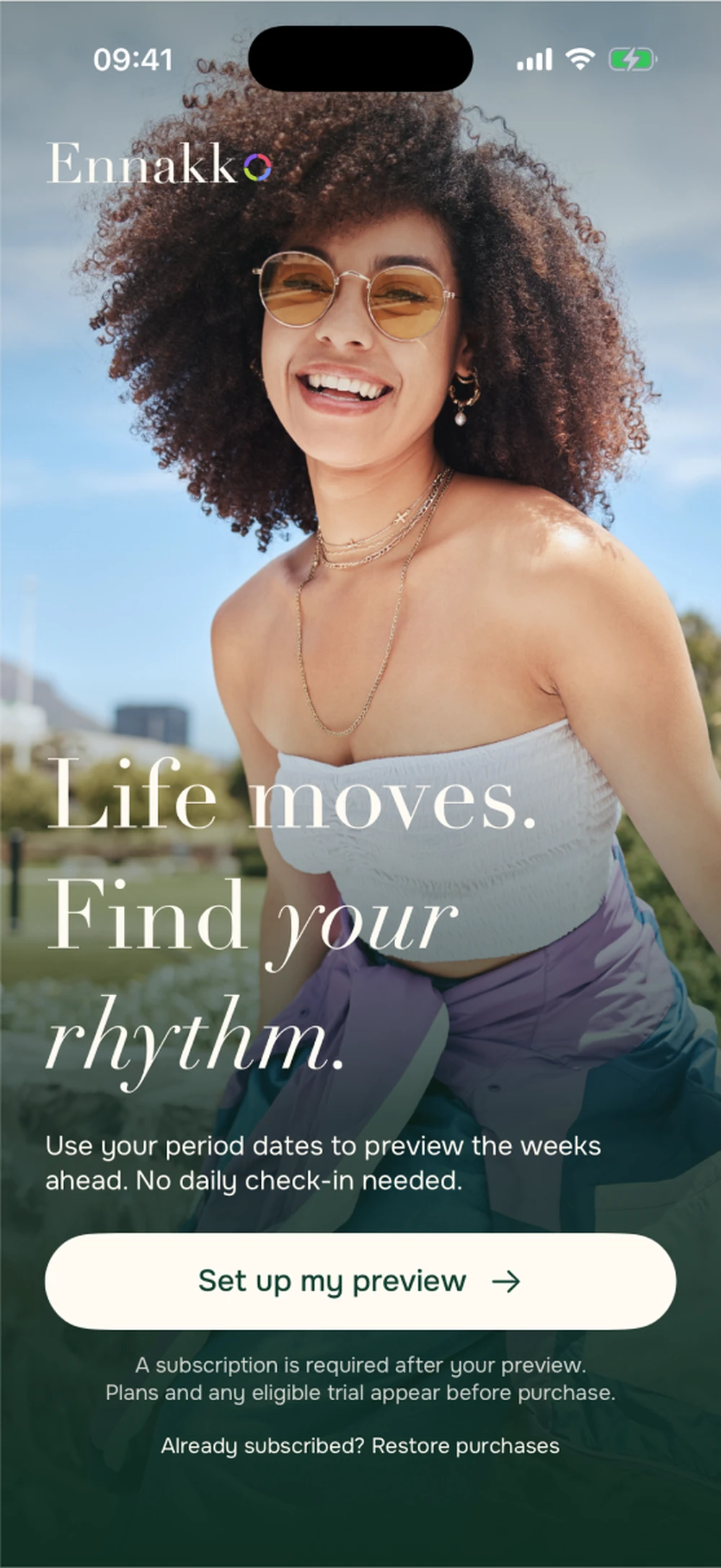
Turns cycle patterns into planning cues without daily tracking or false certainty.





Brief
Research framed the product risks
I tested assumptions around planning value, recurring effort, privacy, trust and willingness to pay before choosing what the first version had to prove.
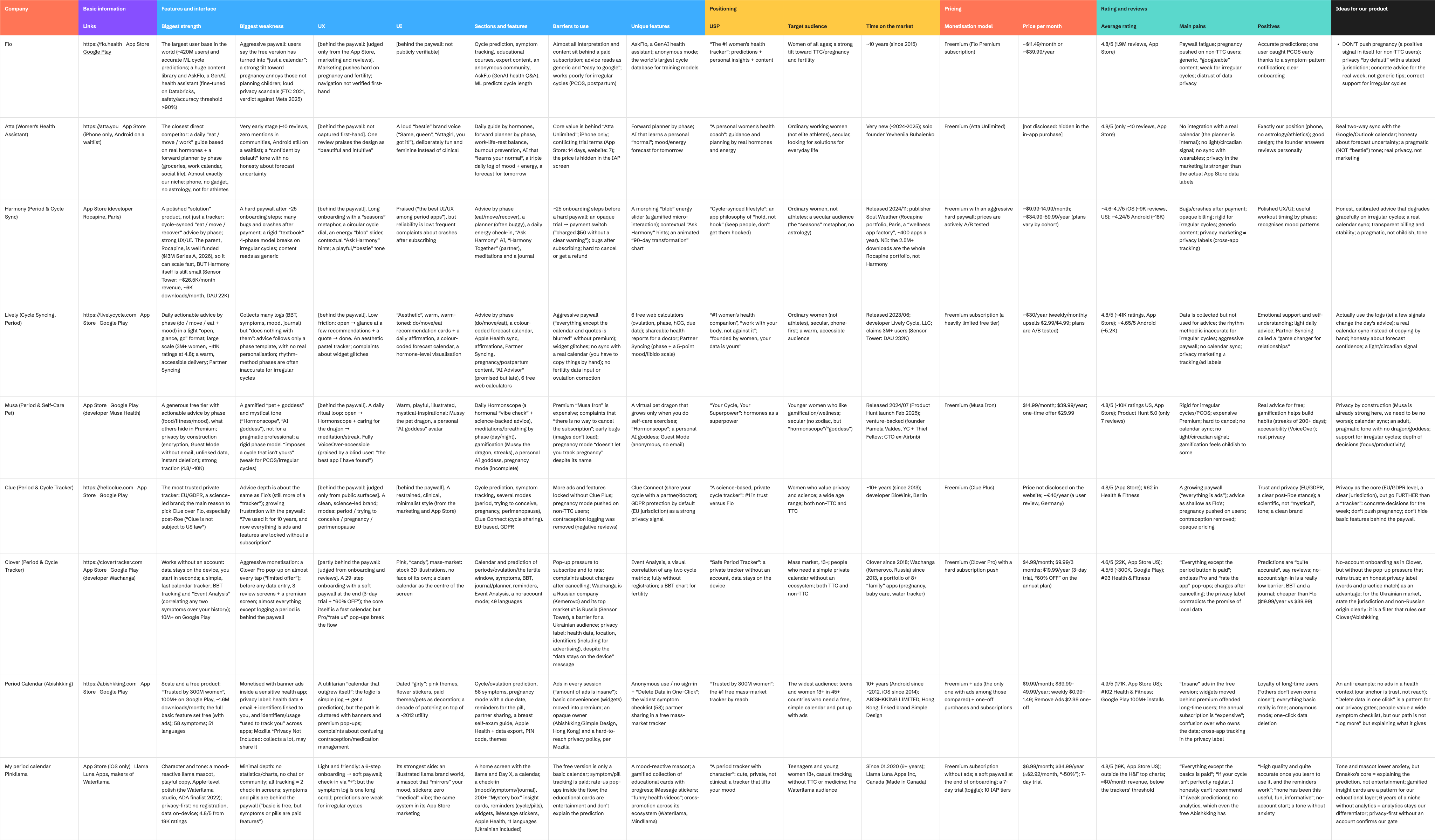
- 9-product benchmark
Mapped trackers and newer cycle-guidance products across input, paywalls, privacy and advice.
- 20+ interviews
Used concrete situations and abandoned habits to separate supported needs from contradictions.
Craft
The benchmark became three constraints
The first version had to make guidance contextual, show value before commitment and meet privacy expectations without a separate Ennakko account.
Evidence narrowed the scope
The scope held to planning value, low recurring effort and visible model limits.
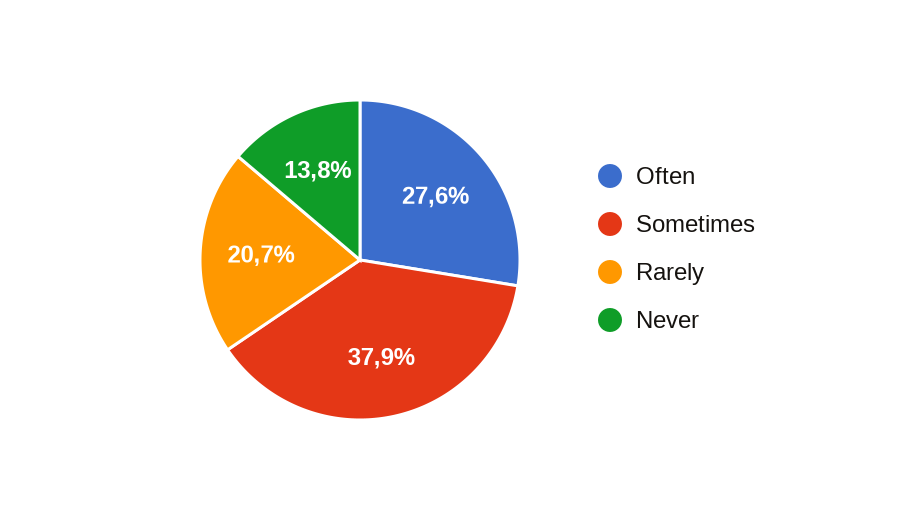
Planning already existed
When asked about the previous three months, 65.5% had often or sometimes changed a real decision because of their cycle.
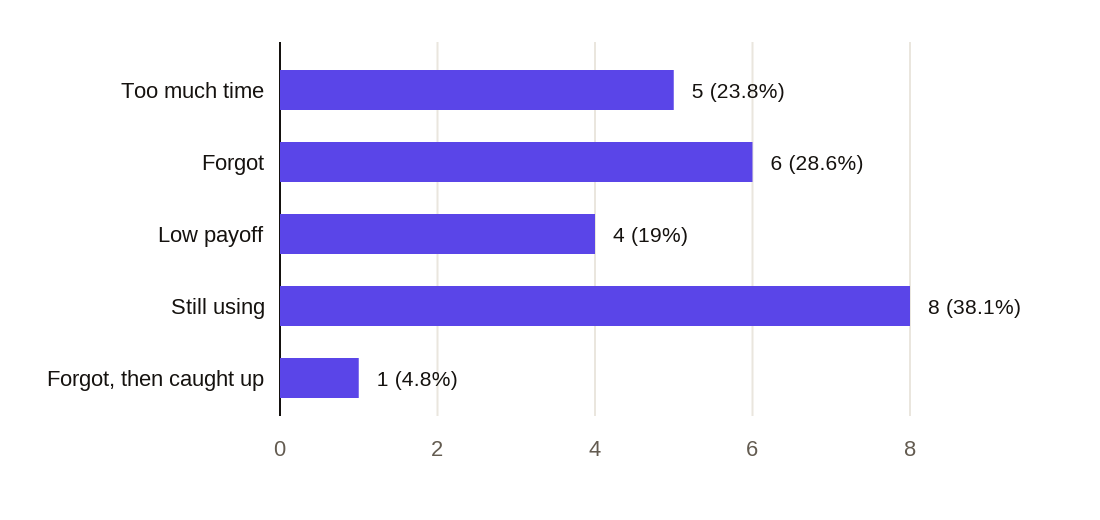
Daily logging broke down
The follow-up on abandoned tracking pointed to forgetting, time and low payoff rather than one single dropout reason.
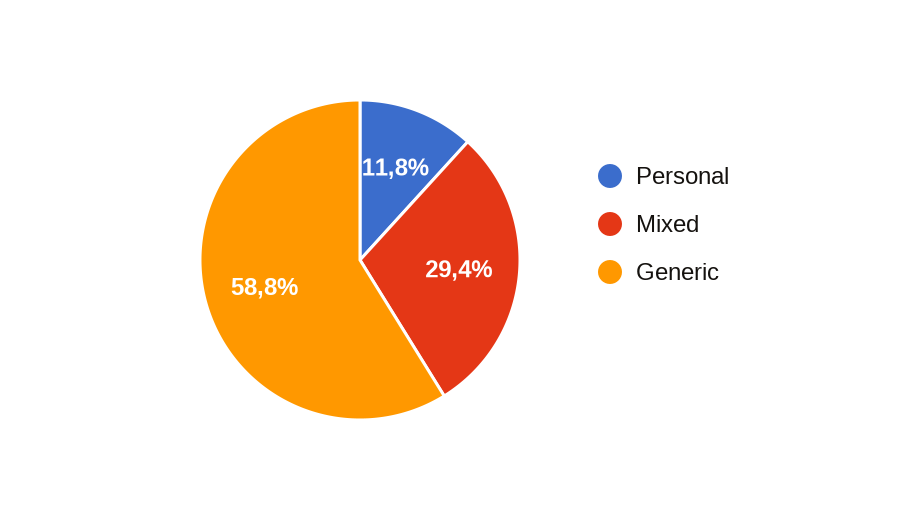
Advice needed context
Advice was the weakest signal: 58.8% called it generic, so the product needed personal patterns and clear model limits.
Two contexts replaced one generic user
Personas, JTBD and journey maps translated the same research into preparation and retrospective understanding.
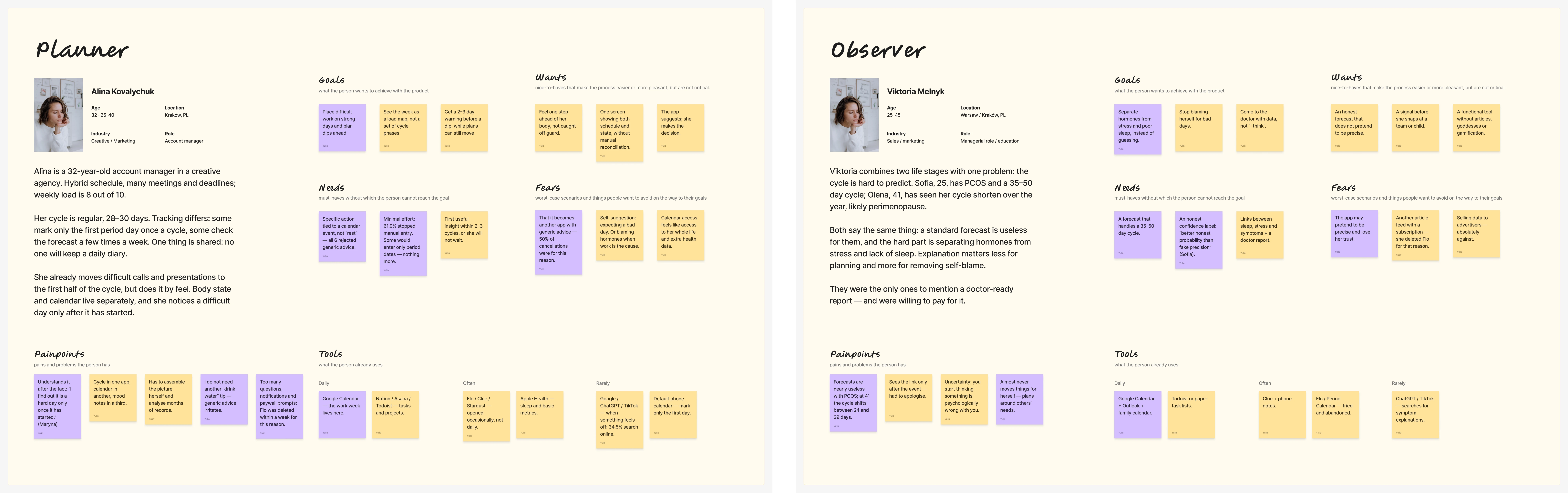
Persona
Planner and Observer separated preparation needs from retrospective understanding.
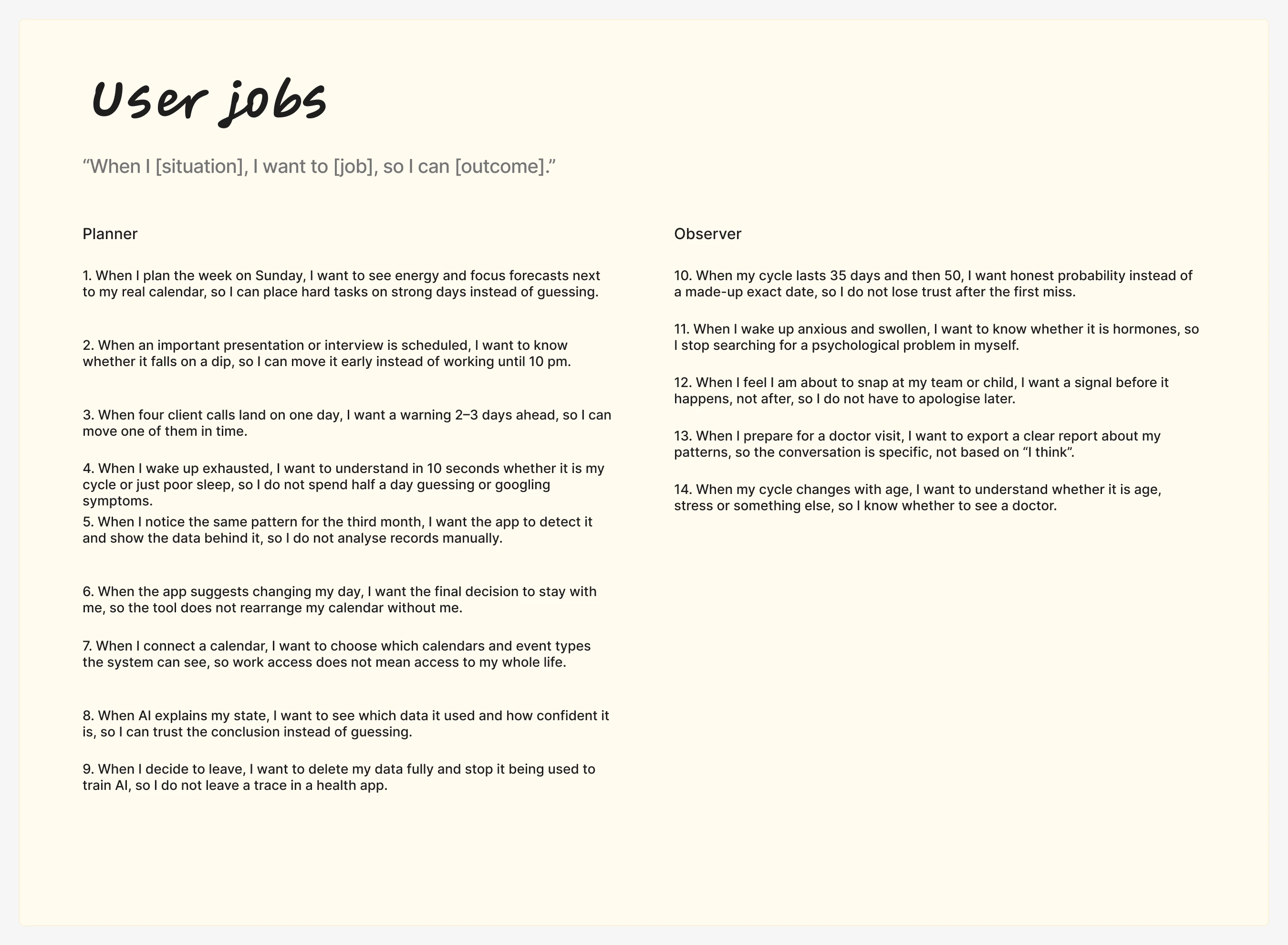
JTBD
Help me translate cycle patterns into decisions without taking control of my schedule.
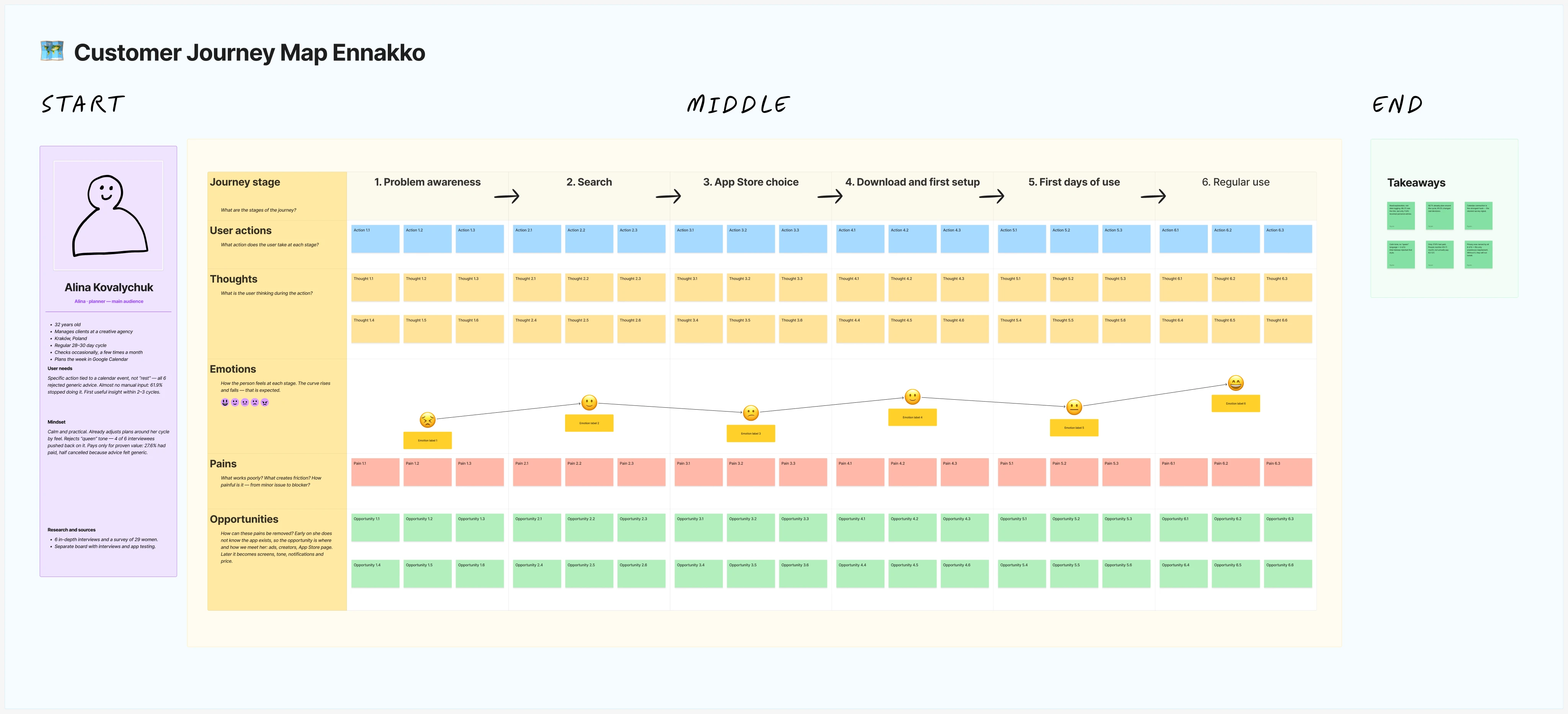
CJM
The journey map moved the product toward a quick preview, optional notes and history for appointments.
Built with AI, checked against the design
I designed Ennakko and built it in SwiftUI with Claude as a coding partner (166 of the app’s 256 commits). The app itself has no AI in it: its estimates come from the period history a person records.
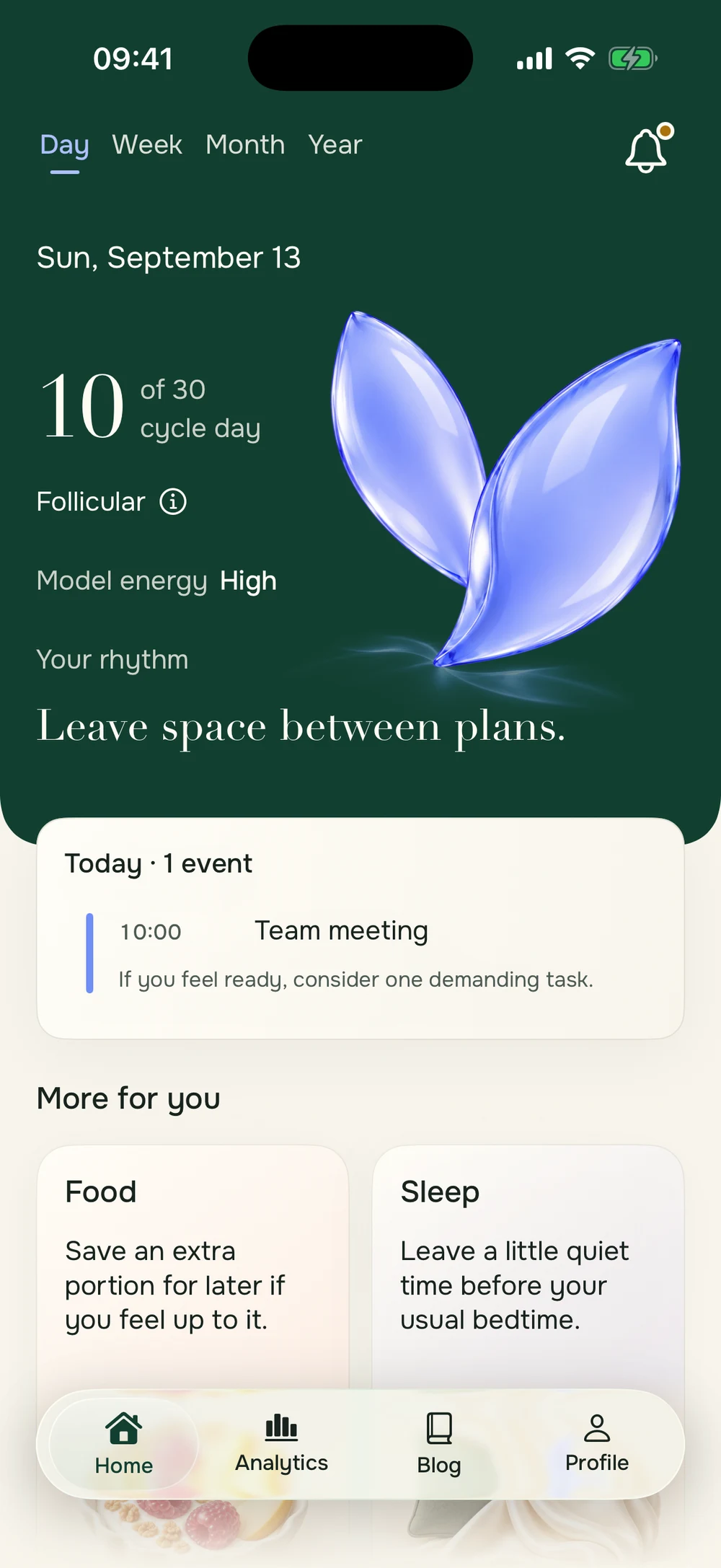
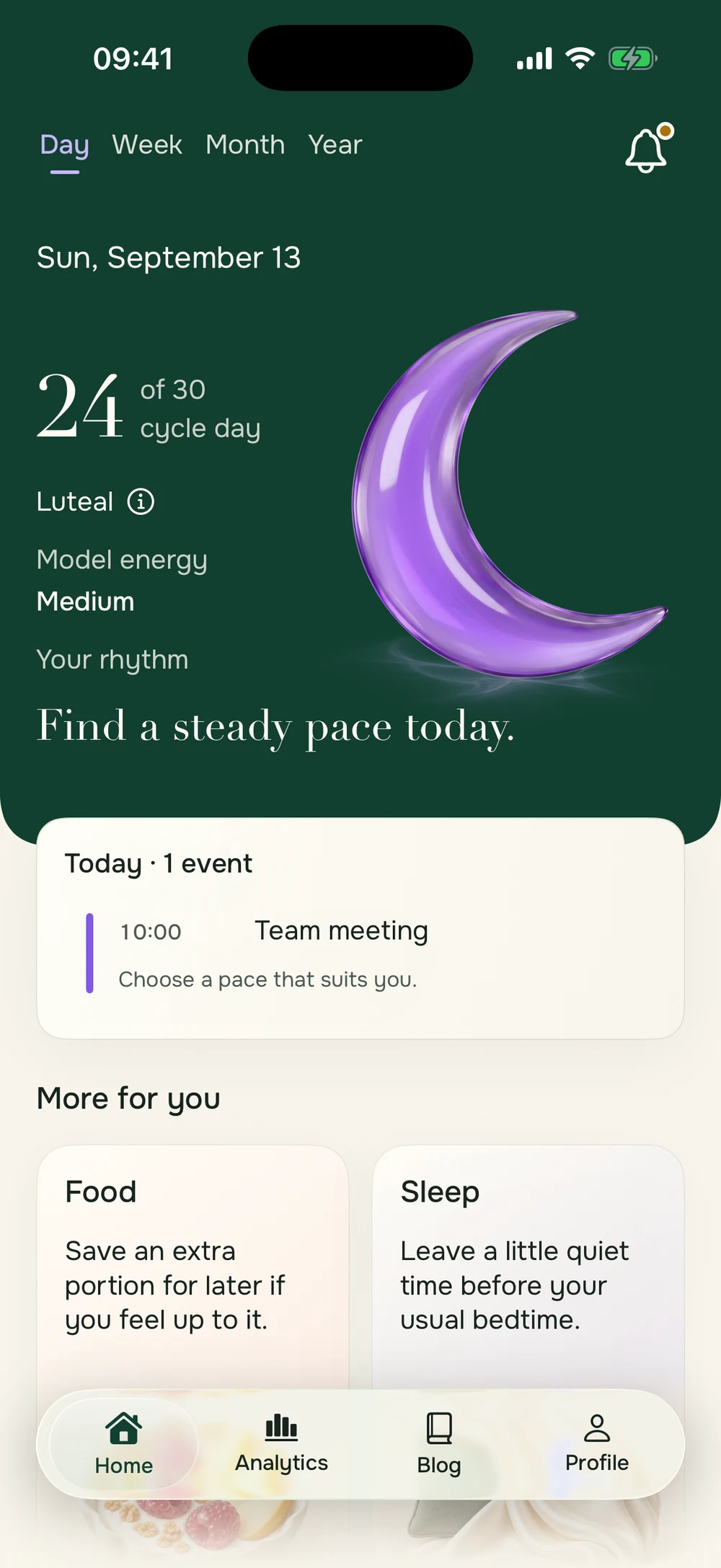
For key screens I worked from a generated visual target. Each screen was built, captured on an iPhone 17 simulator and compared with the target at the same scale before it counted as done.
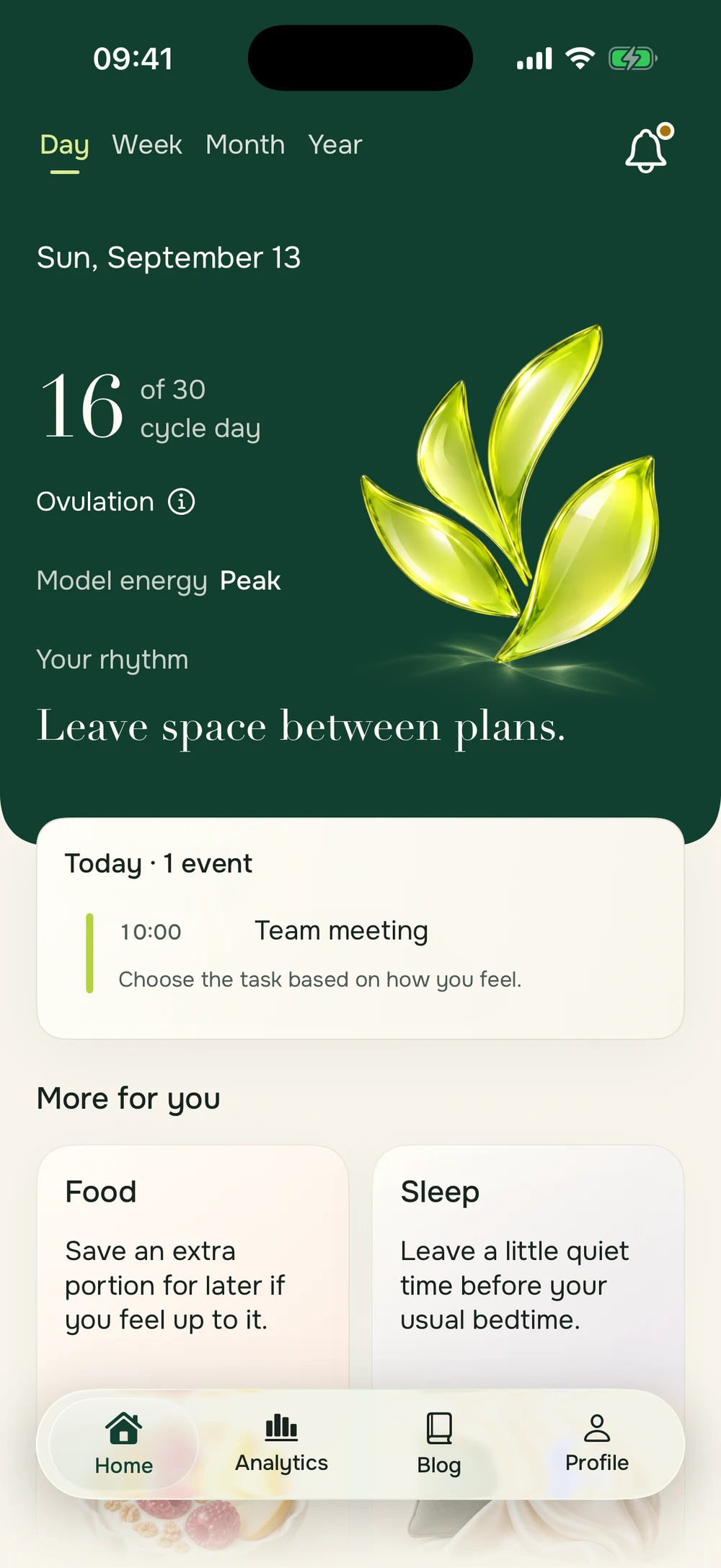
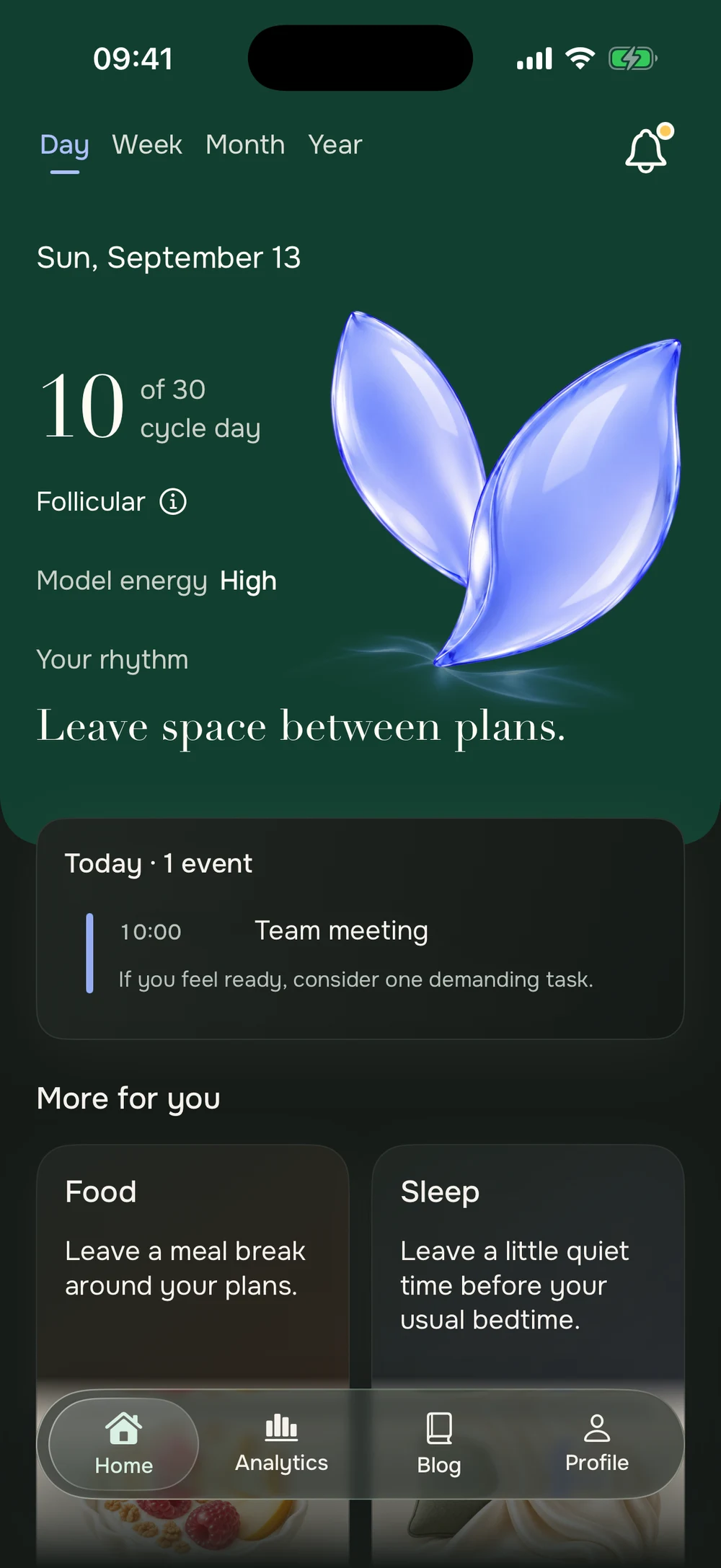
The four phase illustrations are AI-made too: generated with an image model, then cut out and upscaled to 4K.
- The AI assistant, cut
The first plan had a chat assistant. Interviewees raised privacy unprompted, along with control over AI and deleting their data. A chat would also overload a product meant to stay light. Trust came from estimates that show their basis: “better an honest probability than false precision,” one interviewee said.
- Not traced
Where the target broke the system, the build did not follow it. The native status bar and tab bar stayed, flat design tokens replaced its raster gradients and the exact phase glyph stayed instead of its slightly oval copy.
- Real data, not the mock’s
Comparisons ran on the app’s own stored data. Date, energy and advice were never hard-coded to match the sample copy in a generated image.
- Evidence stays in the project
The first review kept its captures in a temporary folder that was later wiped. Since then every check writes its evidence into the project, so a review can still be opened a week later.
The landing makes the app’s three promises first
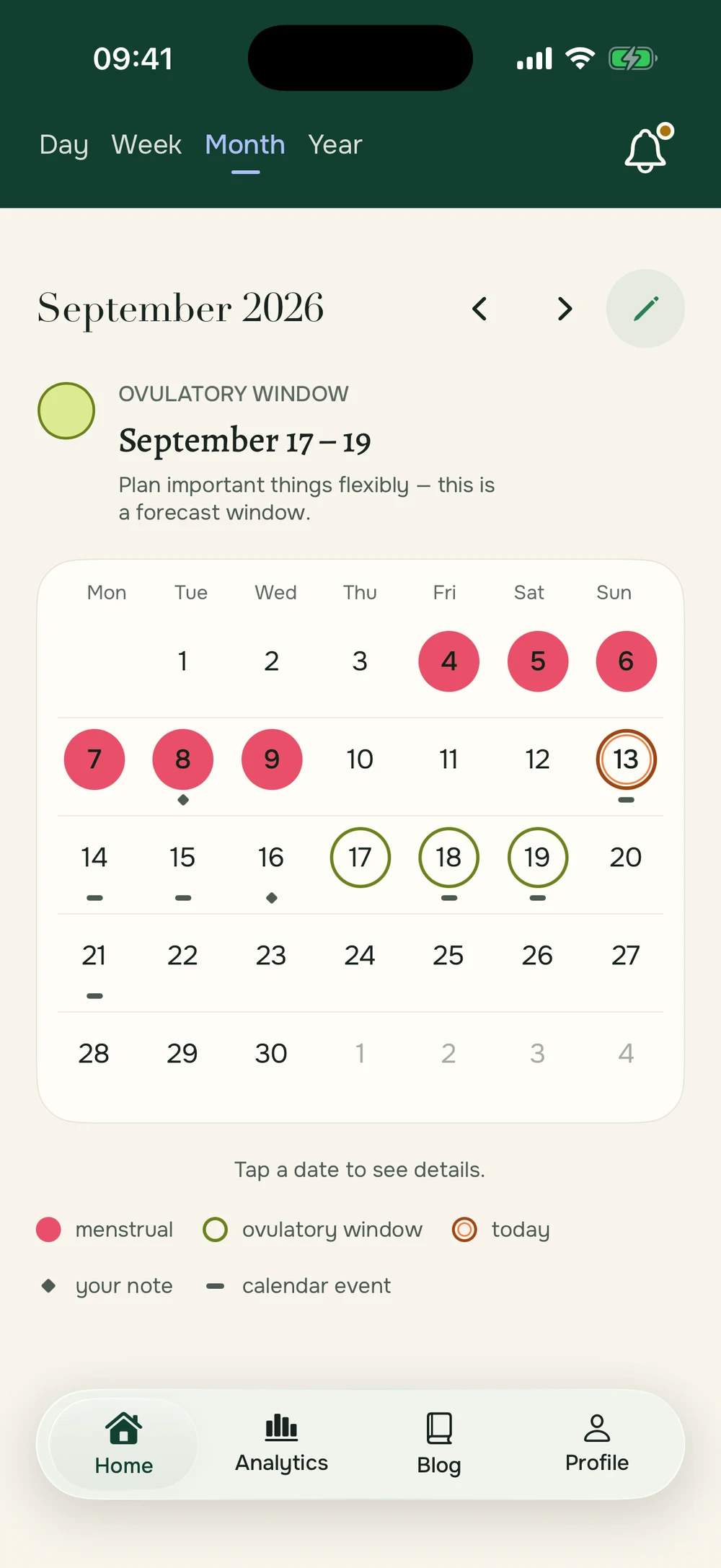
I designed and built ennakko.app, the product’s own site, as a static page. Before asking for the download, the page makes the same three promises as the app: nothing to log every day; a forecast that shows a window, not a date; a cycle that stays in the person’s own iCloud, not on a server of ours.
The page was built in code first. The Figma file now holds an editable desktop and mobile copy of the live page.
See ennakko.app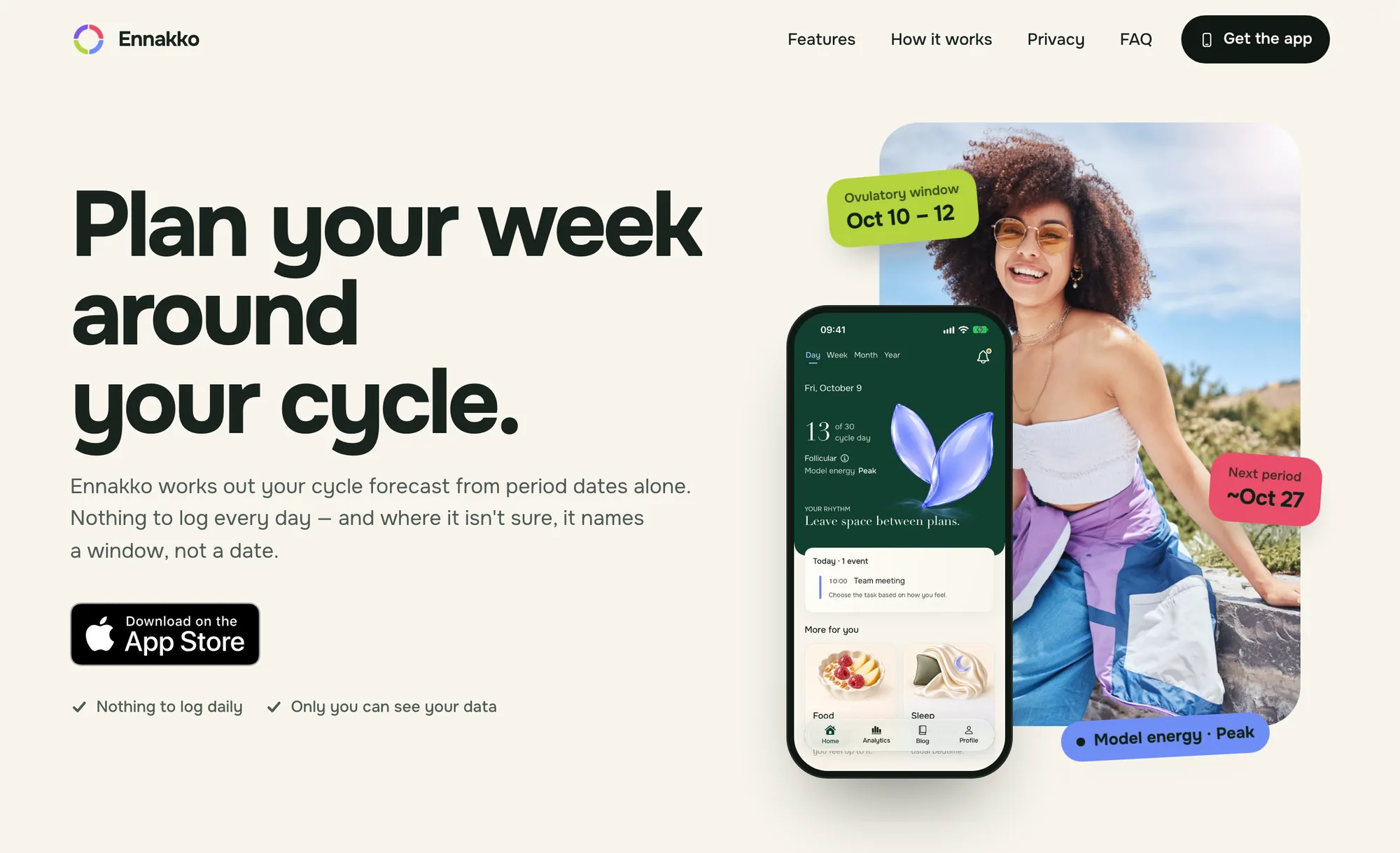
What changed
Research turned into three product decisions
- 01
BeforeRequired daily logging
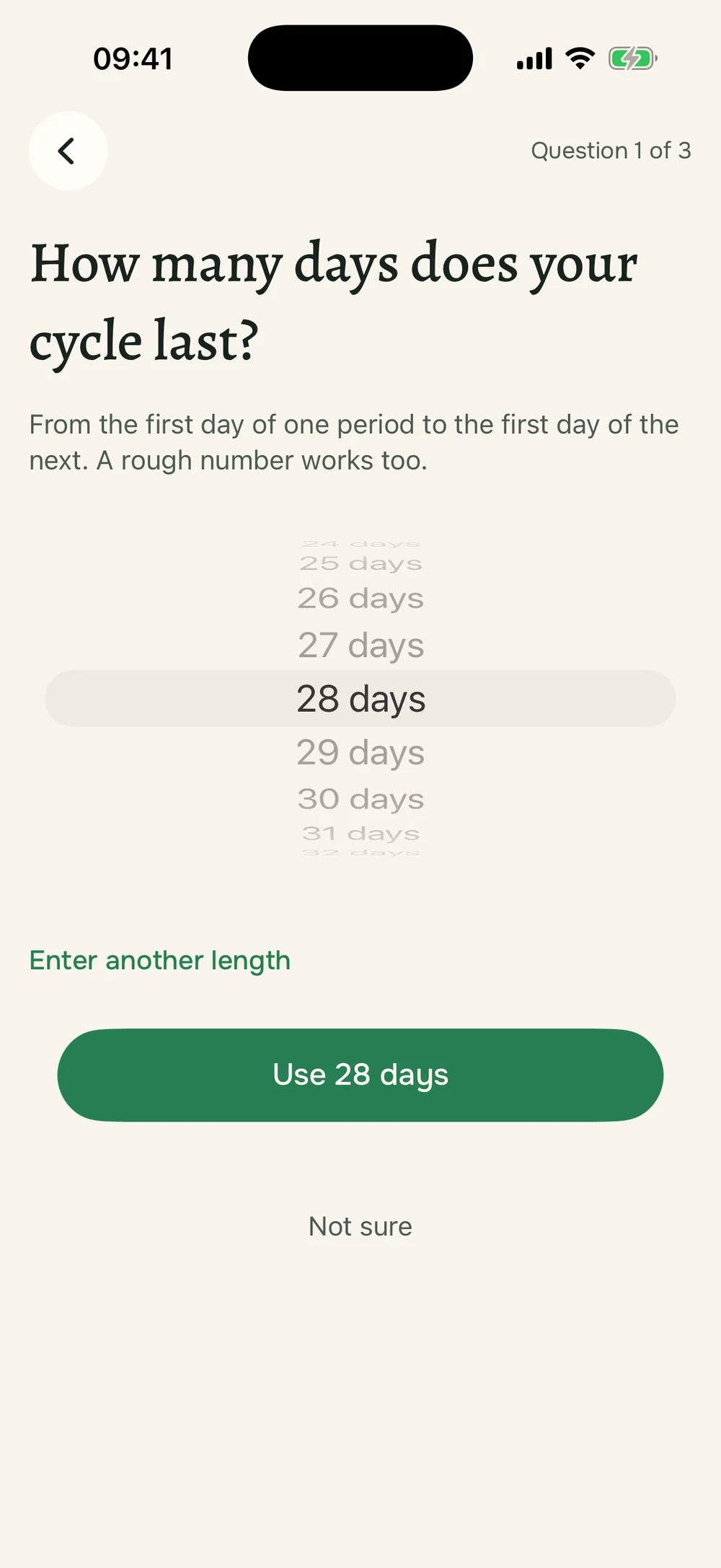
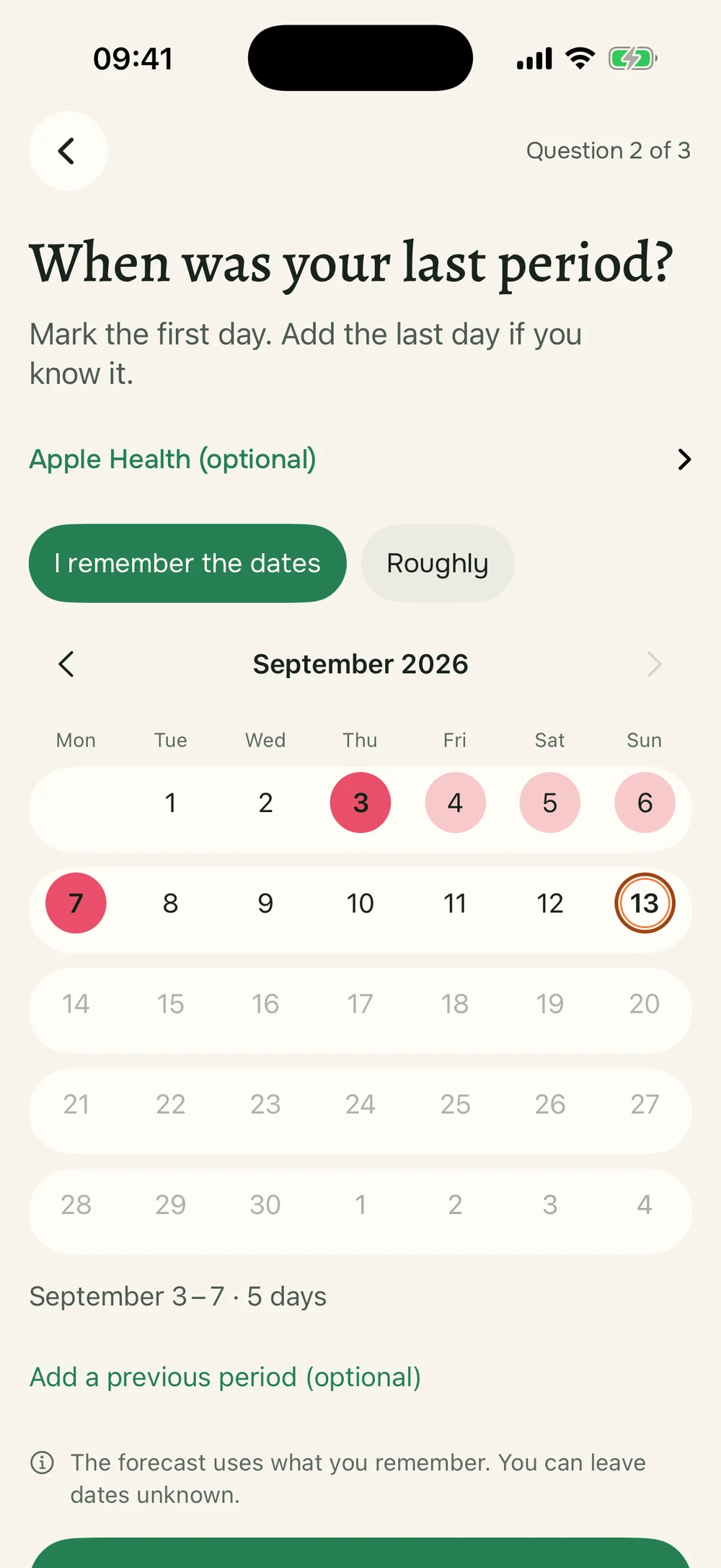
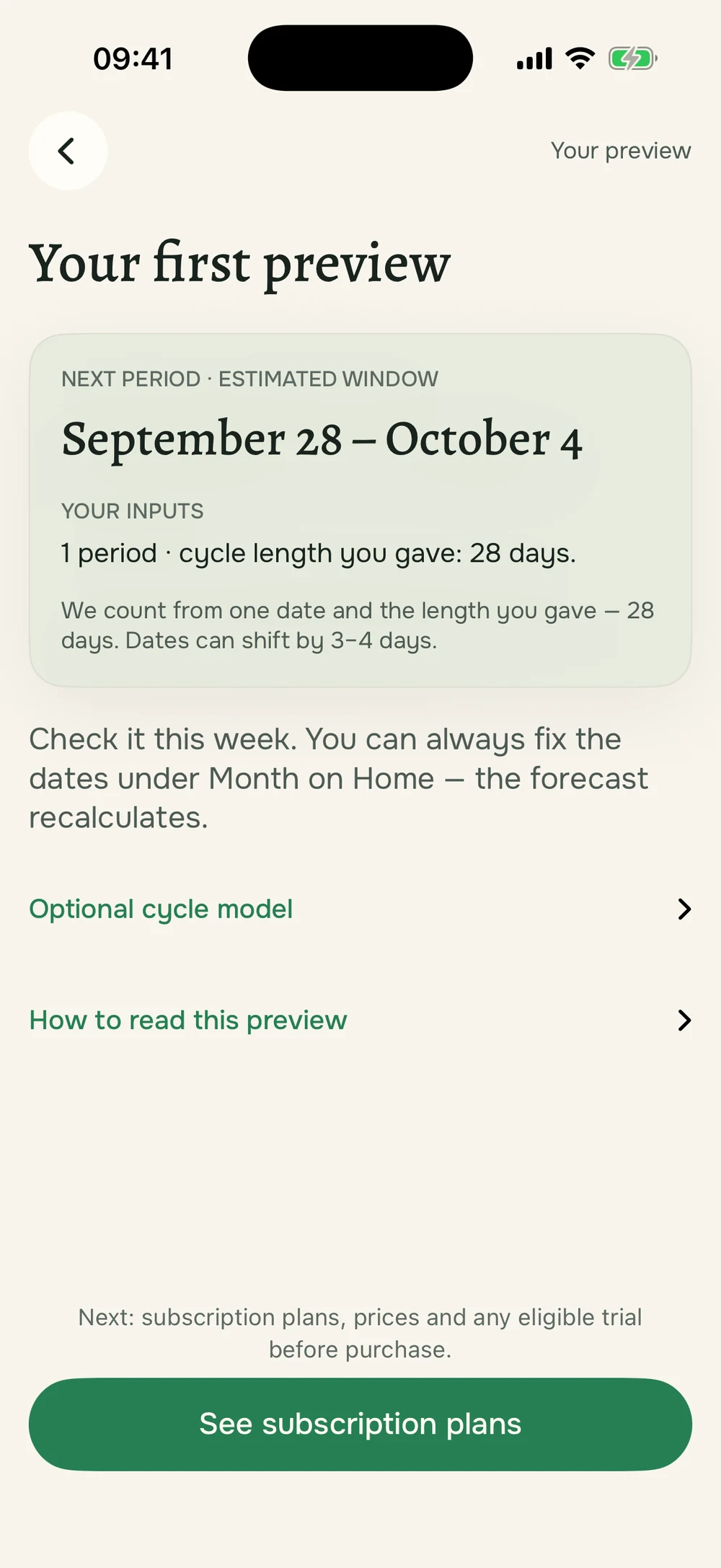
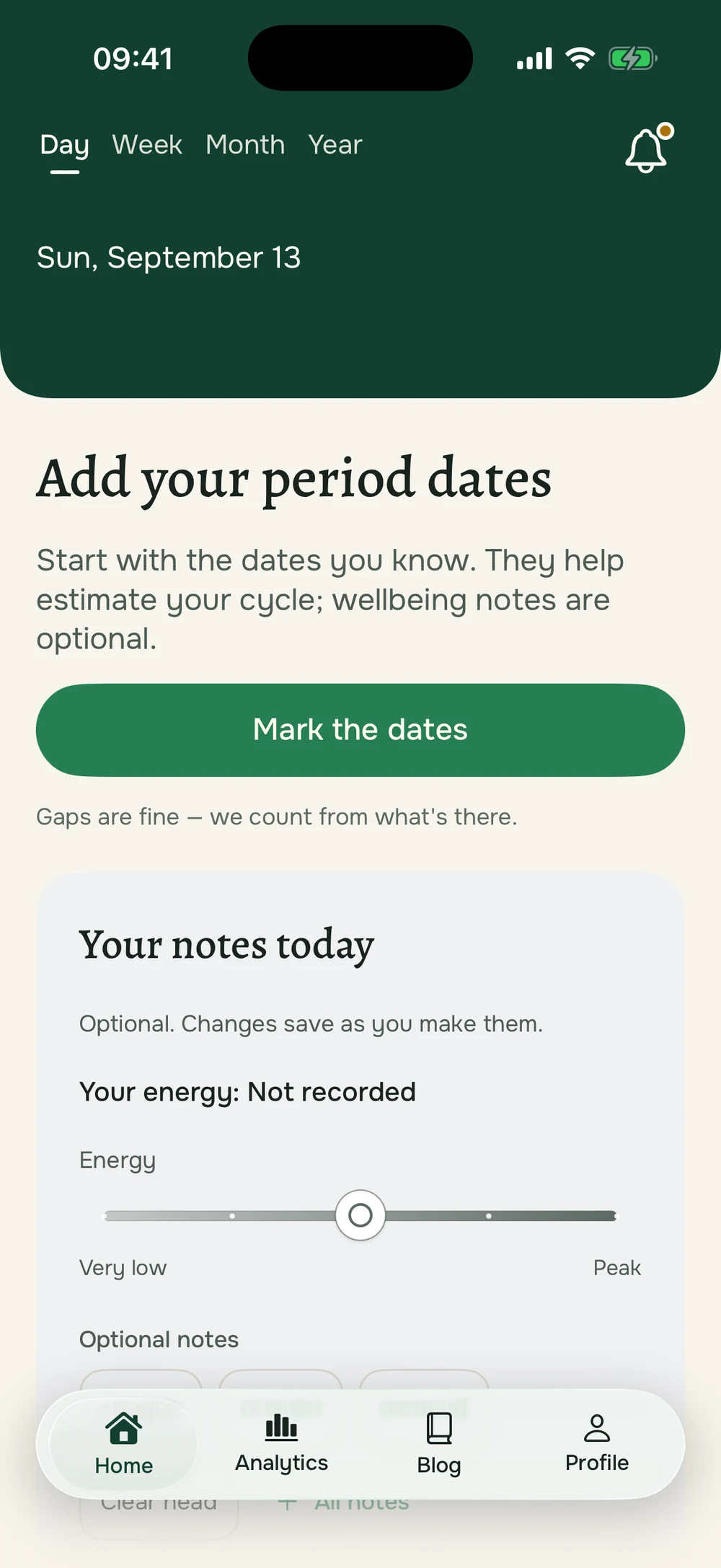
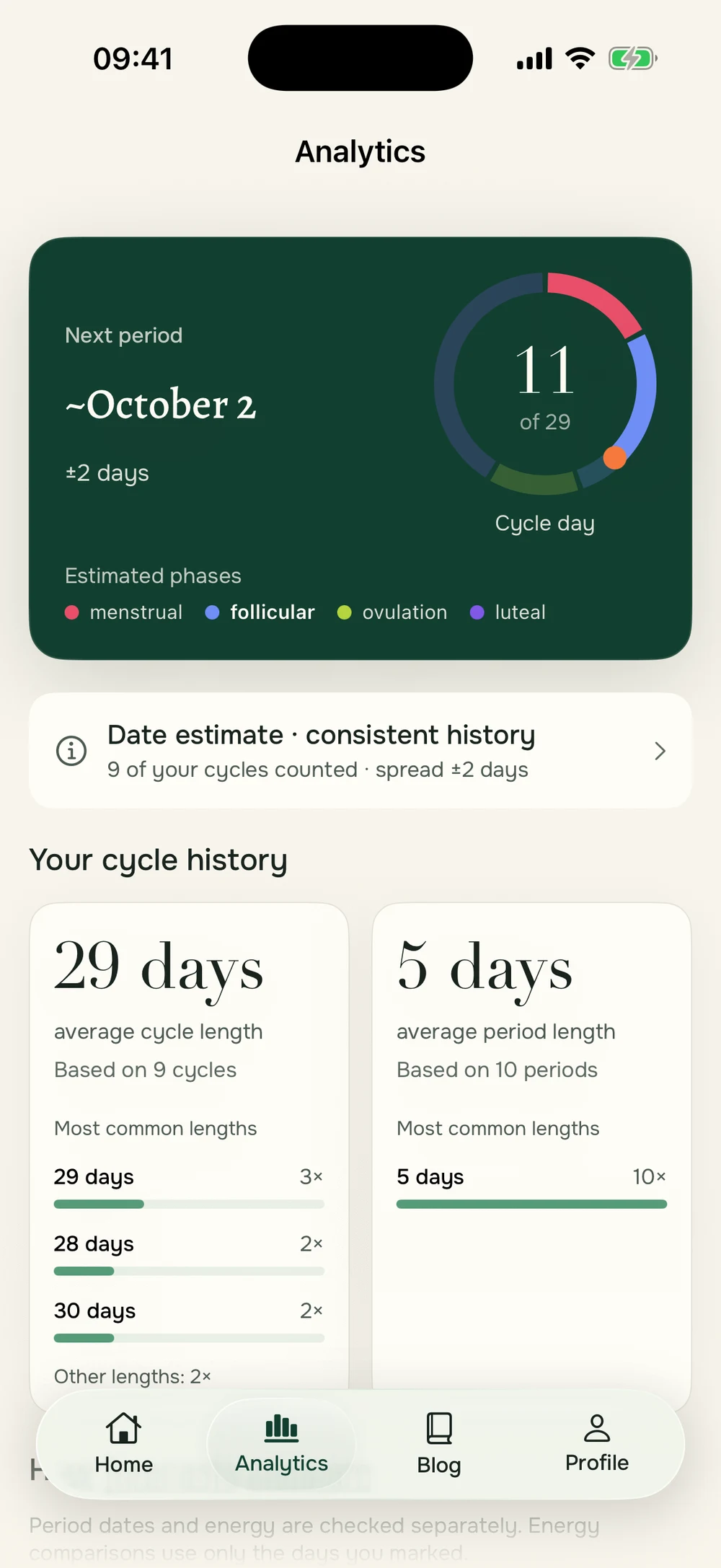
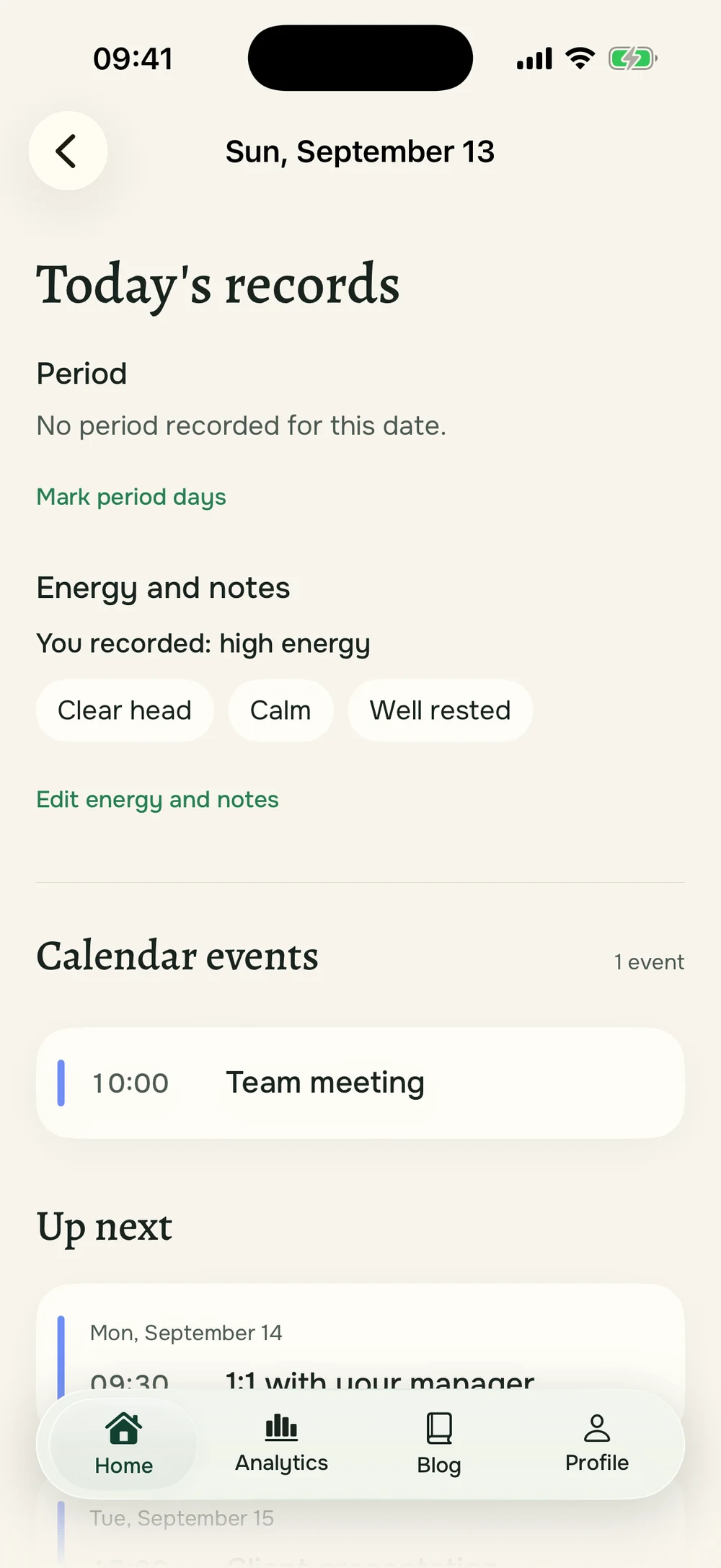
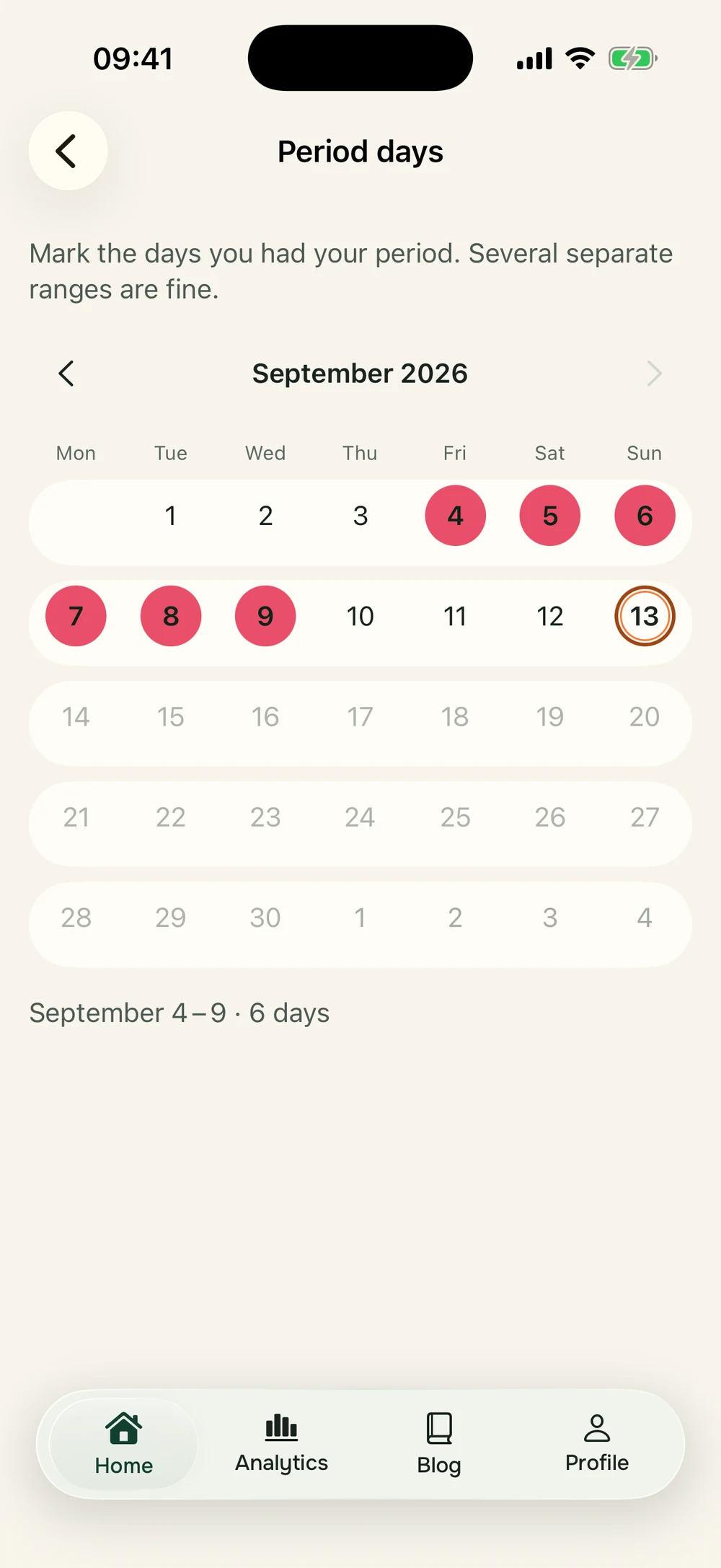
AfterPeriod history with optional notes
WhyForgetting a check-in should not interrupt planning.
- 02
BeforeA single predicted date
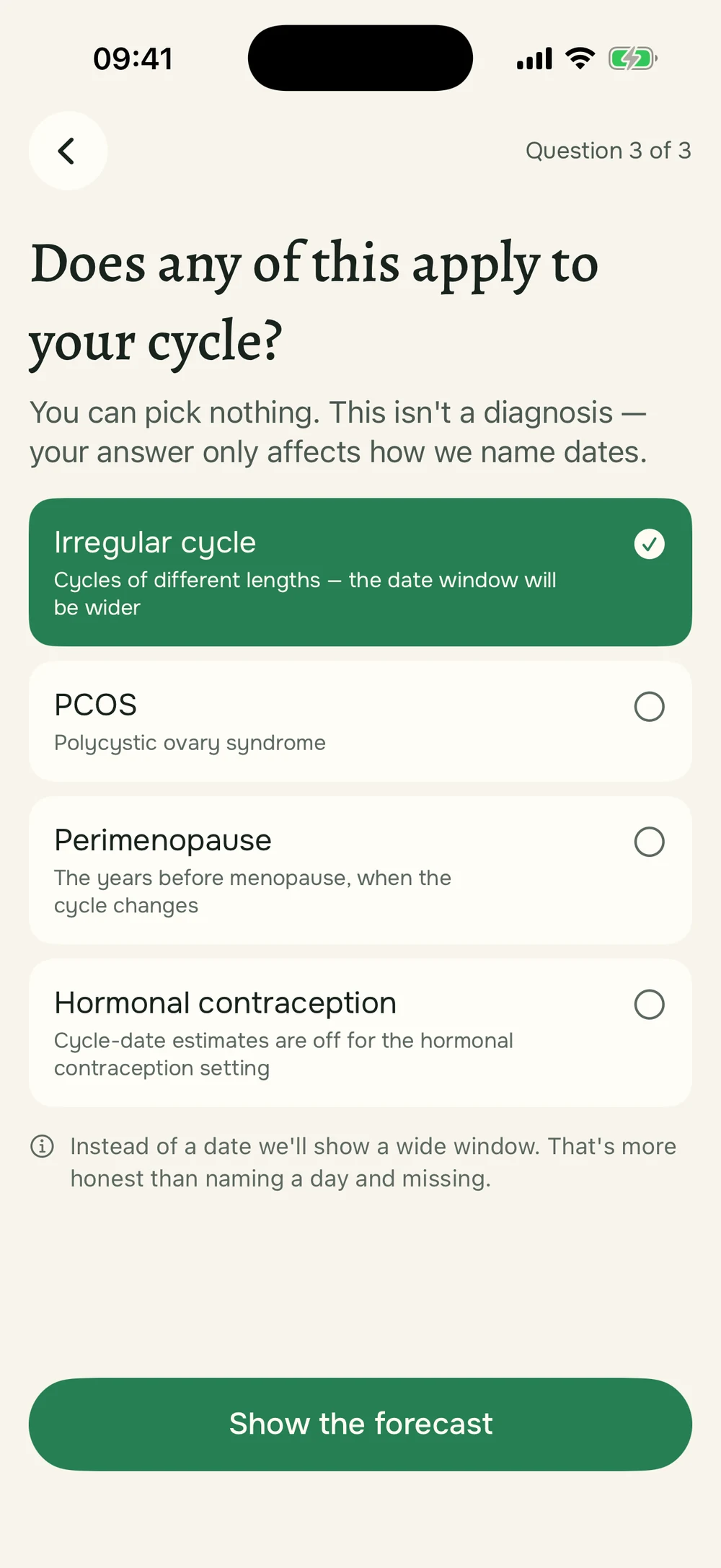
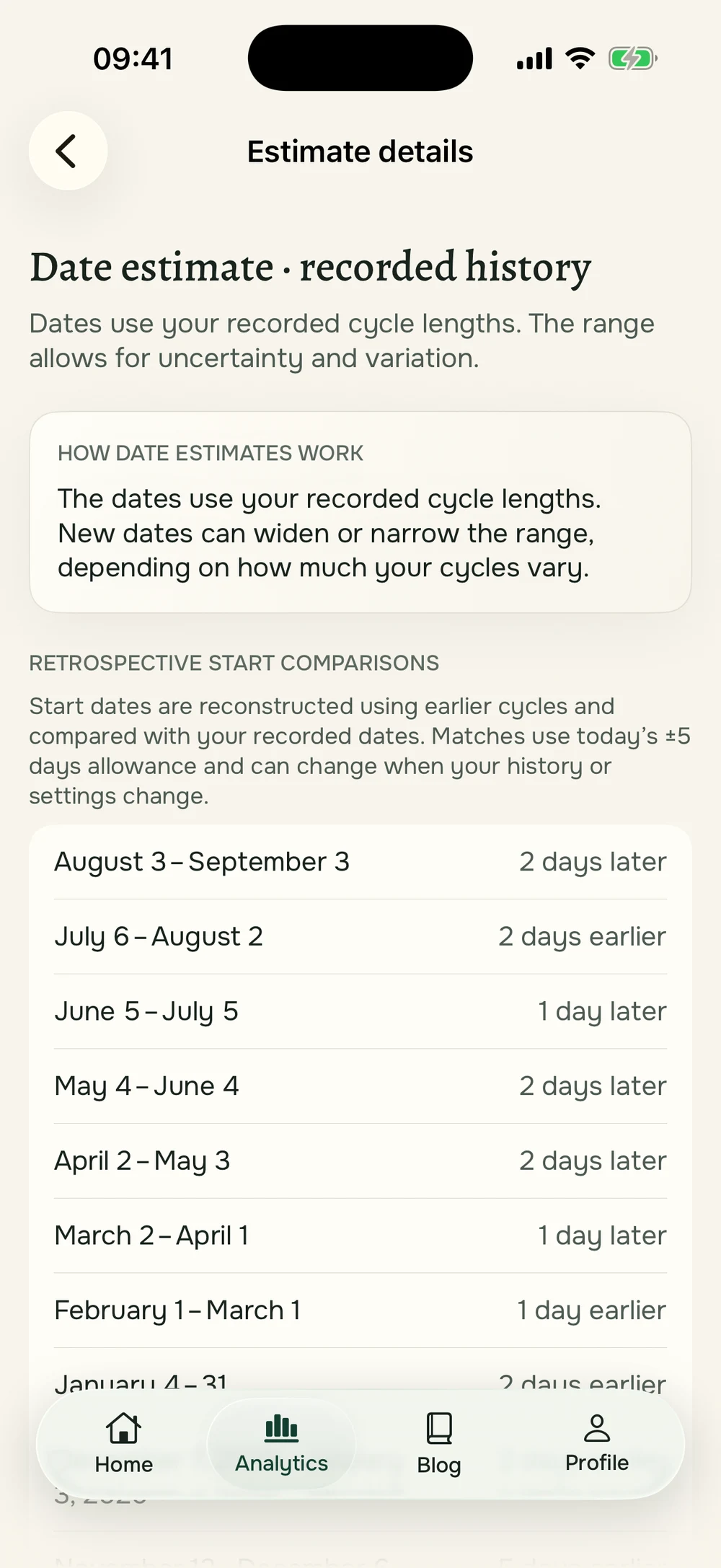
AfterDate windows with recorded inputs
WhyAn estimate needs room for variation and a way to inspect its basis.
- 03
BeforeSeparate registration screens
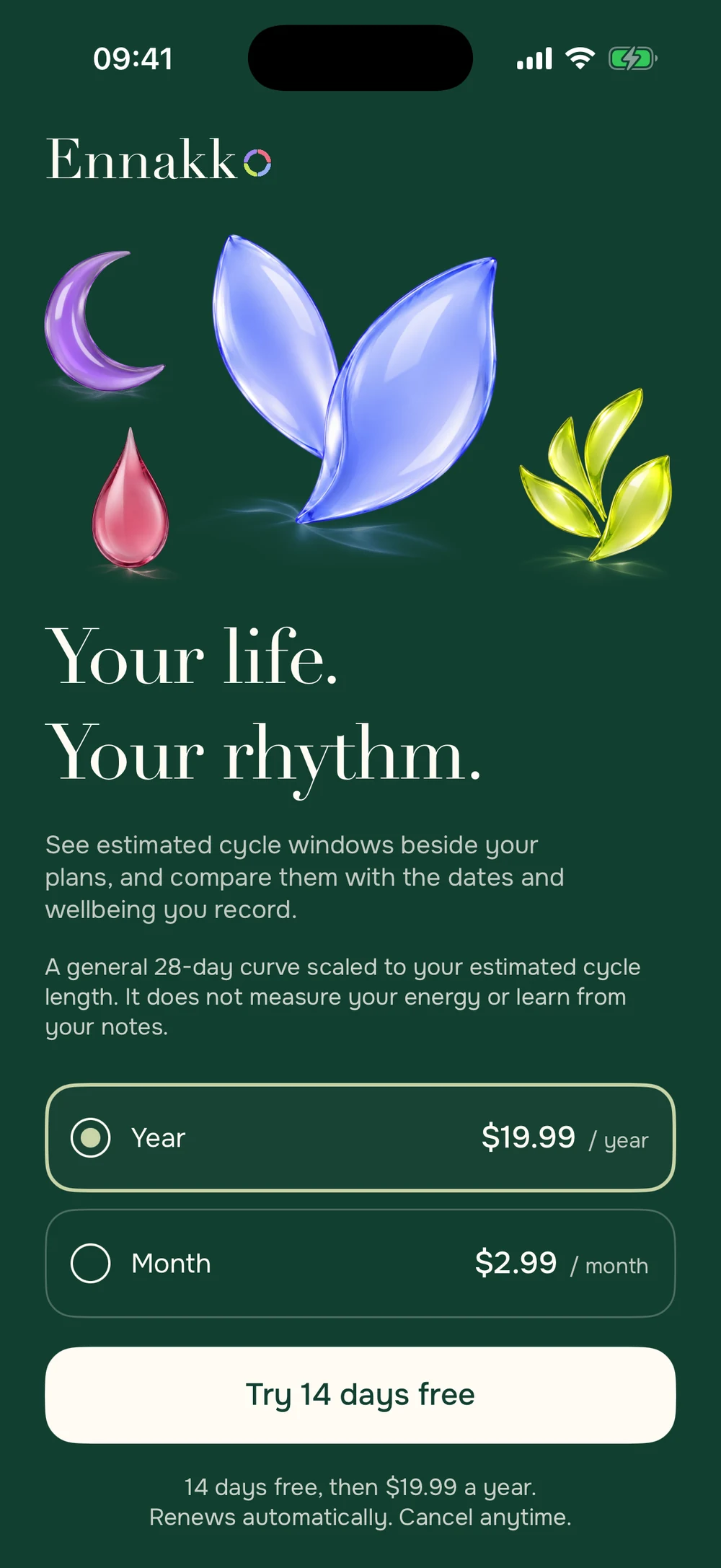
AfterNo Ennakko account
WhyApple handles purchases; processing stays on device and private iCloud sync is optional.
Closing
A planning companion, not a diary
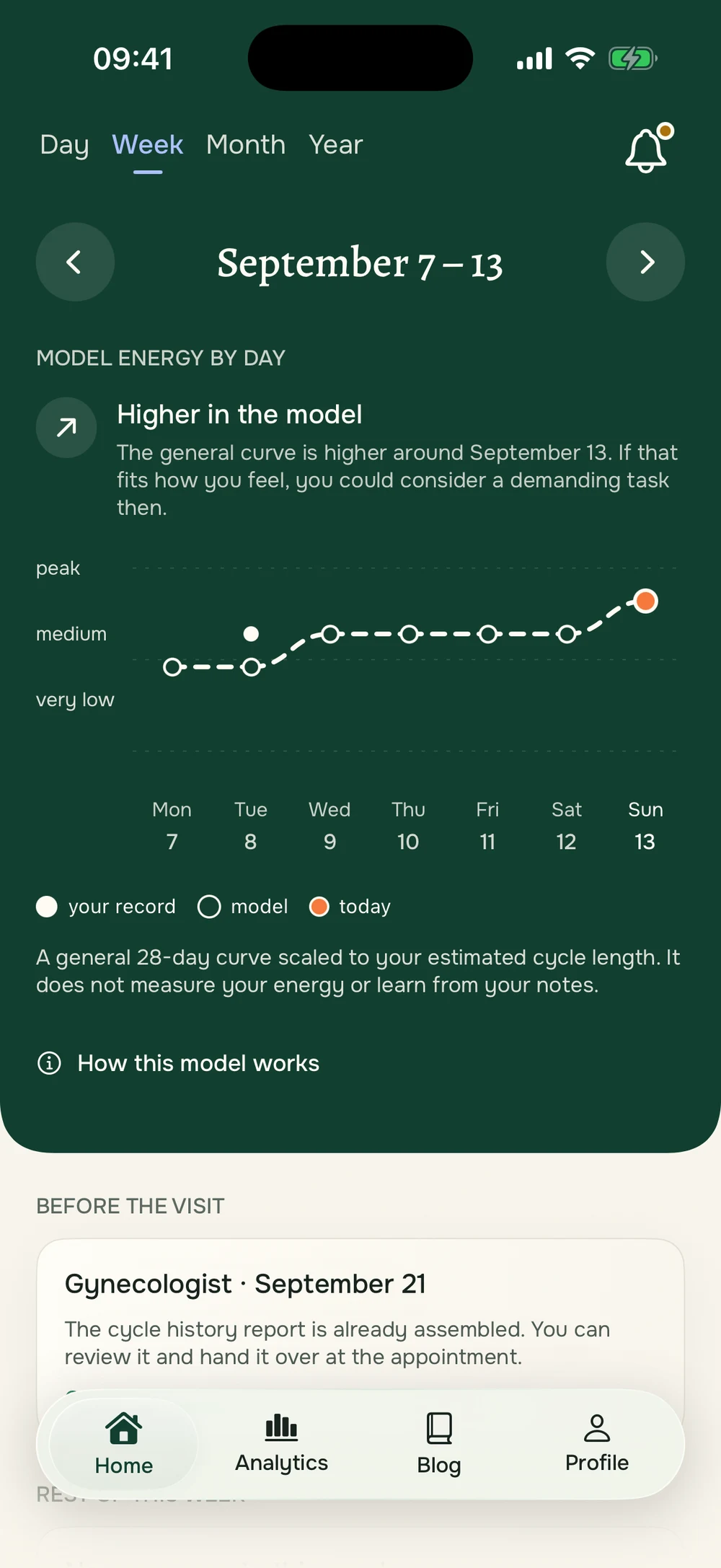
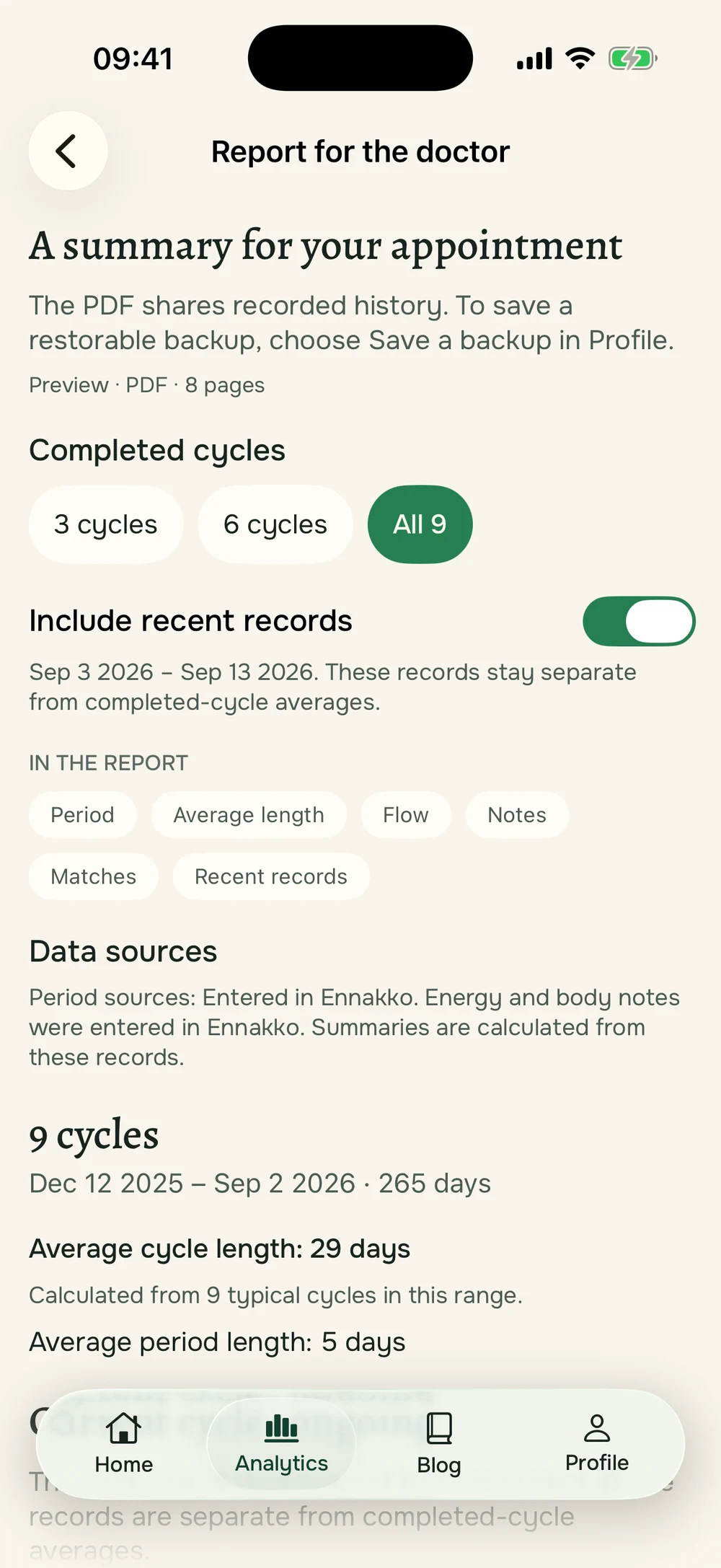
Ennakko gives people a useful preview from remembered dates, keeps daily input optional and makes the model’s limits visible beside calendar context.
The remaining product risk is whether people trust that distinction enough to return before real commitments and consider paying for it.
Outcome
What I learned
- I added a required email sign-up and took it out 3 weeks later. A check showed “restore my history” loaded demo data, so the gate guarded a feature that did not exist. History now syncs through the person’s own iCloud, with no Ennakko account.
- A mentor’s review showed what I had stopped seeing. After it, the weekly chart dropped its axis labels, grid and legend, keeping one summary line and the curve.